Basics of Building Virtual AI Agents for Business Success
AI Strategy, Virtual Agents, Business Automation
The ABC’s of Building Virtual AI Agent Systems for Business
Virtual AI agents are moving from buzzword to business backbone. For companies and agencies under pressure to do more with less, they promise responsive customer service, smoother operations, and new revenue streams— without endlessly adding headcount. But where do you actually start? This guide breaks down the ABC’s of building virtual AI agent systems so you can move from experimentation to real, scalable results.
Why Virtual AI Agents Matter for Modern Businesses and Agencies
Virtual AI agents are software entities that can perceive information, reason about it, and take action—often through natural language. They can answer client questions, qualify leads, schedule appointments, generate reports, or orchestrate internal workflows across tools like CRMs, project management platforms, and marketing automation systems.
For businesses, AI agents promise faster response times, more consistent service, and the ability to scale operations without proportional increases in costs. For agencies, they unlock new service offerings—AI-powered client portals, automated campaign management, and 24/7 support—while improving margins and differentiation in a crowded market.
📌 Key Takeaway: Virtual AI agents are not just chatbots. They are work-performing systems that can understand context, access business data, and trigger real actions across your tech stack.
The ABC Framework for Building Virtual AI Agent Systems
To make the process practical, we’ll structure this guide as the ABC’s of building virtual AI agent systems. Each letter represents a stage and mindset you need to build agents that are useful, safe, and scalable:
A – Assess & Architect: Understand your needs, define use cases, and design the overall system.
B – Build & Bridge: Implement the agents, connect them to data and tools, and design conversations and workflows.
C – Control & Continuous Improve: Govern, monitor, and optimize your agents as living systems, not one-off projects.
A is for Assess & Architect: Laying the Right Foundations
A1. Assess Business Goals and Pain Points
Before choosing models or tools, clarify why you are building virtual AI agents. For both businesses and agencies, the most successful projects start with one or two high-impact problems such as:
Overloaded support teams, long response times, or inconsistent answers.
Sales and account managers spending hours on repetitive email replies, proposals, or reports.
Fragmented processes across tools—CRM, ticketing, project management, billing—that require manual copying and follow-up.
Translate those into concrete objectives, such as “reduce first-response time by 60%,” “automate 40% of repetitive support tickets,” or “cut weekly reporting time in half.” These become the north star for your AI agent design and help you prioritize features.
💡 Pro Tip: For agencies, align AI agent goals with client KPIs—lead volume, conversion rate, retention—so you can clearly attribute impact and justify retainers or new service lines.
A2. Audit Data, Processes, and Tools
Next, review what your agents will need to “see” and “touch” in order to be genuinely helpful. Ask three questions:
What knowledge do they need? FAQs, product catalogs, policy documents, case studies, campaign results, internal SOPs, SLAs, pricing sheets, and so on.
What systems do they need to access? CRMs, ticketing systems, marketing platforms, calendars, billing, HR systems, or proprietary databases.
What decisions and actions should they take? Answer questions, route requests, update records, escalate issues, or generate documents.
This audit reveals both opportunities and constraints. You might discover your support knowledge base is outdated or that your CRM lacks consistent fields. Fixing those gaps often delivers immediate value, even before an AI agent is deployed, and it ensures your agent has clean, reliable information to work with.
A3. Architect the Overall Agent System
With goals and context in place, you can design the high-level architecture of your virtual AI agent system. For most businesses and agencies, this involves three layers:
Interaction layer: Where users meet the agent—website chat, in-app assistants, email triage, WhatsApp, Slack, Teams, or client portals.
Intelligence layer: The AI models and reasoning logic that interpret requests, fetch knowledge, and decide what to do next.
Execution layer: Integrations, APIs, and workflows that allow the agent to perform actions in your systems.
At this stage, define which types of agents you need. Many organizations start with one generalist agent and quickly realize they need a constellation of specialists instead:
A support agent for FAQs, troubleshooting, and ticket routing.
A sales assistant for lead qualification, follow-up emails, and proposal drafting.
A project coordinator for agencies, helping manage deadlines, briefs, and client approvals.
📌 Key Takeaway: Think in terms of a system of agents, not a single “super bot.” Specialized agents with clear scopes are easier to design, govern, and improve.
B is for Build & Bridge: Turning Designs into Working Agents
B1. Choose Your Build Approach: Platform, Partner, or In-House
There is no one-size-fits-all way to build virtual AI agents. Most businesses and agencies choose one of three paths—or a combination over time:
No-code/low-code platforms: Ideal for quick deployment and non-technical teams. They provide templates, drag-and-drop flows, and built-in integrations. Agencies can use these to prototype client-facing agents rapidly and validate demand before deeper investment.
Specialist vendors and partners: Great for complex industries (healthcare, finance, legal) where domain expertise, security, and compliance are critical. You co-design the agent while the vendor handles the heavy lifting and infrastructure.
Custom in-house builds: Best for organizations with strong technical teams and unique workflows. This offers maximum flexibility but requires more time and governance.
For agencies, this decision also shapes your business model. Platforms enable packaged offerings and faster onboarding, while custom builds can justify higher retainers and deeper, stickier client relationships.
B2. Design the Agent’s Role, Personality, and Boundaries
A virtual AI agent is more than a technical construct; it is part of your brand experience. Clarify three elements before you start building conversations or workflows:
Role: Is this agent a friendly concierge, a technical specialist, a project coordinator, or an internal analyst? Define its job description as you would for a human hire.
Personality and tone: Professional and concise for B2B enterprises, warm and conversational for consumer brands, or neutral and factual for regulated industries. Agencies should align tone with each client’s voice guidelines.
Boundaries: What can it not do? Where must it hand off to humans? Define clear escalation rules for sensitive topics, complex negotiations, or high-value accounts.
These design choices are implemented via system prompts, guardrails, and conversation flows. Getting them right early prevents confusion for users and reduces the risk of the agent “overstepping” its authority.
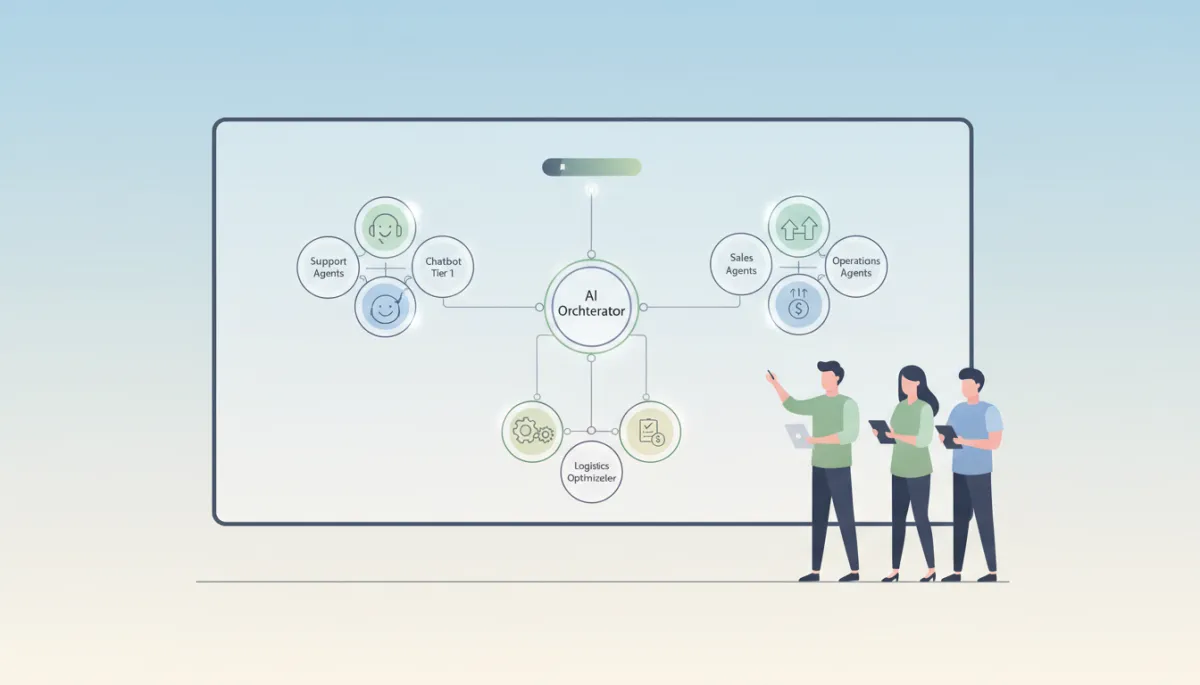
Mapping roles and boundaries for each agent prevents overlap and confusion as systems scale.
B3. Bridge the Agent to Your Knowledge and Tools
An AI agent is only as effective as the information and capabilities you give it. Bridging the agent to your ecosystem typically involves three components:
Knowledge integration: Connect the agent to curated knowledge sources—help centers, internal docs, product specs, or campaign archives. Many systems now support retrieval-augmented generation, where the agent searches your content in real time and uses it to craft accurate, contextual responses.
Tool integration: Enable the agent to act in your systems: create tickets, update CRM fields, schedule meetings, trigger email sequences, or generate draft documents. This is where virtual agents move from “talking” to doing real work.
Context awareness: Provide the agent with relevant context—user identity, account tier, recent interactions, open tickets, active campaigns—so it can personalize responses and decisions.
For agencies, this bridging step is where you can create significant differentiation. By connecting agents into each client’s stack—ad platforms, analytics, CRM—you can offer AI services that feel truly embedded, not generic.
B4. Design Conversations and Workflows Around Real Journeys
Rather than scripting every possible sentence, focus on mapping user journeys and the key steps where an agent can add value. For example:
A prospect visits your site, asks about pricing, shares their use case, and books a demo—guided by a sales-focused AI agent that qualifies and routes them appropriately.
A client emails your agency with a campaign question; an AI agent drafts a tailored, on-brand reply, pulls in performance data, and proposes the next steps for an account manager to approve.
An employee asks an internal HR agent about leave policies; the agent provides answers, calculates remaining days, and initiates a request in your HR system.
For each journey, define:
Typical user intents and questions.
The ideal outcome (booked meeting, resolved issue, submitted request).
Decision points, handoff triggers, and data the agent needs at each step.
💡 Pro Tip: Start with one or two journeys and get them working reliably end to end. It’s better to have a narrow but excellent agent than a broad but unreliable one.
C is for Control & Continuous Improve: Scaling Safely and Strategically
C1. Establish Governance, Guardrails, and Human Oversight
As virtual AI agents become more capable, control becomes as important as capability. Businesses and agencies must put governance in place to protect customers, data, and brand reputation. Key elements include:
Clear approval workflows for outbound communications, especially for sales, legal, and financial content. Many teams start with “AI drafts, human approves” before moving to partial automation.
Access controls that limit which systems and data the agent can use. Internal agents may have broader permissions than external-facing ones.
Escalation rules for sensitive topics (billing disputes, cancellations, legal questions) or high-value accounts, ensuring a human steps in quickly.
Agencies in particular should document these guardrails in client agreements. This clarifies responsibilities and builds trust that AI will enhance, not jeopardize, client relationships.
C2. Monitor Performance with Business-Centric Metrics
Monitoring should go beyond technical uptime or token usage. To justify and optimize virtual AI agent systems, track metrics that matter to your business or agency:
Resolution and deflection rates: What percentage of issues are resolved by the agent without human intervention? How many tickets or calls are avoided altogether?
Time saved: Reduction in average handling time, report creation time, or campaign setup time for your teams and clients.
Revenue impact: Increases in lead conversion, deal velocity, upsell opportunities, or client retention linked to AI-assisted journeys.
Combine quantitative metrics with qualitative feedback—comments from users, client surveys, and internal team observations. This helps you identify where agents are delighting people and where they are falling short or causing friction.
C3. Continuously Improve Through Iteration and Learning Loops
Virtual AI agents are not “set and forget.” They learn from data, but they also need structured improvement cycles driven by your team. Consider establishing a monthly or quarterly review process that includes:
Reviewing transcripts and edge cases where the agent struggled or handed off to humans. Use these to refine prompts, knowledge sources, and workflows.
Updating content—FAQs, policies, playbooks—so the agent always reflects your latest offerings and decisions.
Testing new capabilities, such as proactive outreach, multi-channel support, or deeper analytics, once the basics are stable.
Agencies can turn this continuous improvement into a recurring service: “agent optimization and coaching.” You review performance, tweak configurations, and report back to clients with clear, data-backed improvements each cycle.
C4. Communicate Change and Support Adoption
Even the best-designed virtual AI agent system will underperform if people do not understand or trust it. Communicate clearly to both internal teams and external users:
What the agent does and how it helps—saving time, speeding responses, or providing 24/7 access to support or insights.
Where humans fit in—who can step in when needed, and how to reach them quickly.
How feedback is used to improve the system over time, reinforcing that this is a collaborative evolution, not a top-down mandate.
For agencies, this communication is part of your value proposition. By educating clients and their teams on how to work alongside AI agents, you become a strategic partner, not just a technical vendor.
Practical Use Cases: How Businesses and Agencies Can Deploy AI Agents Today
For Businesses: From Support Desks to Revenue Teams
Businesses of all sizes can apply the ABC framework to high-impact areas:
Customer Support: Agents that answer common questions, triage complex issues, and surface relevant knowledge to human agents, improving both self-service and assisted service experiences.
Sales and Account Management: Agents that summarize call notes, draft follow-ups, suggest next best actions, and keep CRMs up-to-date, freeing humans to focus on relationships and strategy.
Operations and Internal Support: Agents that help employees navigate policies, IT troubleshooting, procurement requests, or training resources, reducing internal ticket volumes and onboarding time.
For Agencies: Productizing Expertise with AI Agents
Agencies are uniquely positioned to turn virtual AI agents into new revenue streams. Consider these possibilities:
Client-facing strategy agents: Agents trained on your methodology and each client’s data that can answer “What’s happening in my account?” or “What should we do next quarter?” around the clock.
Campaign and content assistants: Agents that help your team brainstorm ideas, adapt messaging across channels, and generate first drafts while staying on brand and on brief for each client.
White-labeled support agents: Agents embedded on client sites or apps, managed by your agency as a service, with monthly optimization and reporting built into your retainer.
📌 Key Takeaway: Agencies that master virtual AI agents can shift from selling hours to selling outcomes—automation, availability, and intelligence—at scale.
Getting Started: A Simple Roadmap for Your First 90 Days
Bringing the ABC’s together, here is a practical 90-day roadmap for businesses and agencies ready to build their first virtual AI agent system:
Weeks 1–2: Assess & select use case. Run workshops with key stakeholders to list pain points, prioritize one or two high-impact journeys, and define success metrics.
Weeks 3–4: Architect the system. Decide on your build approach, identify required integrations, design the agent’s role and boundaries, and map the target user journey.
Weeks 5–8: Build & bridge. Implement the agent in a limited environment (e.g., one channel or one client account), connect it to core knowledge and tools, and test flows internally with a small group.
Weeks 9–10: Pilot with real users. Launch to a subset of customers or employees, closely monitor performance, capture feedback, and refine prompts, content, and handoff rules.
Weeks 11–12: Formalize governance and scale plan. Document guardrails, reporting, and improvement cycles. Decide how and where to expand—additional channels, use cases, or client deployments.
Conclusion: Turning the ABC’s into Competitive Advantage
Building virtual AI agent systems is no longer a futuristic experiment. For businesses, it is a path to leaner, more responsive operations. For agencies, it is a chance to productize expertise, deepen client relationships, and unlock new recurring revenue. The organizations that thrive will be those that treat AI agents not as one-off chatbots, but as thoughtfully designed members of their teams and service offerings.
By following the ABC’s of building virtual AI agent systems —Assess & Architect, Build & Bridge, and Control & Continuous Improve—you create a clear, repeatable path from idea to impact. You start with real business goals, design agents around human journeys, connect them to the right knowledge and tools, and then govern and refine them over time. The result is a system that grows more capable and valuable with each iteration.
Whether you are a business leader looking to modernize operations or an agency owner exploring your next competitive edge, now is the moment to move from theory to practice. Start small, stay focused on outcomes, and treat your virtual AI agents as living systems that you guide, coach, and evolve. Done well, they will become some of the most reliable and scalable members of your team—and a core part of how you create value in the years ahead.
