Real Estate Embraces Agentic AI for Success
Real Estate, Agentic AI, Brokerage Strategy
Why Real Estate Is Ready for Agentic AI
AI is moving faster than most Main Street businesses can govern it. Real estate is feeling that pressure first. Buyers and sellers are now trained by on-demand platforms, generative search, and instant messaging to expect immediate, contextual responses—not “we’ll get back to you during business hours.” For brokerages, teams, and independent agents, the question is no longer whether to deploy Agentic AI. The question is whether you can deploy it responsibly, in a way that protects your brand, your data, and your people while driving clear business outcomes.
At Target Stream Media, we work with brokerages that live in the real world—Main Street offices, multi-office regional brands, and independent teams who cannot afford a misstep on compliance or customer trust. They are asking three hard questions:
Fear: Will AI replace my people, expose client data, or make decisions I cannot control?
Uncertainty: What actually happens to proprietary information—our playbooks, contracts, and client details—once they touch an AI system?
Doubt: Can we trust AI to be secure, ethical, and compliant with shifting rules around privacy, TCPA compliance, and consent?
These questions are rational. The National Association of REALTORS® represents more than 1.5 million members across thousands of brokerages, teams, and offices—a highly fragmented market where technology adoption ranges from cutting-edge to paper-and-pen. In that environment, dropping in “one more tool” is not the answer. You need a governed AI operating layer that supports every role in Realty: agents, brokers, team leaders, and multi-office owners.
1. The Speed-to-Lead Wedge: Where Agentic AI Pays for Itself
A prospective buyer or seller taps a property ad on Instagram at 10:30 p.m. They submit a form on your website, reply to a text, call the number on a sign, or click through a Real Estate Lead Generation portal. In that moment, they expect a response—not tomorrow, not “when the agent is free.” They are comparing your responsiveness to every other experience they have on their phone.
The consumer does not care if the agent is in another showing, driving between appointments, or putting kids to bed. They care that someone acknowledges them, answers a few basic questions, and sets a next step. If they do not hear back quickly, they move on to the next agent, portal, or brand that feels more available. This is not a technology problem—it is an economic one.
📌 Key Takeaway: You are already paying for leads. The question is whether your response time allows you to keep them. Or as we tell brokerage owners: “Don't spend money generating leads and then make the consumer wait for a human to respond.”
An AI Lead Response Agent changes that math. Within a governed Agentic AI framework, it:
Answers every call, text, and web inquiry in seconds, 24/7, across website, portals, social ads, and phone.
Qualifies buyers and sellers with structured questions—area, price range, timing, financing, motivation—without feeling like a form.
Books showings and listing consultations directly onto approved calendars, using rules you define.
Routes each lead by geography, property type, specialty, or rotation logic, so the right human receives the right opportunity.
Hands off to the assigned agent with the full conversation captured in your CRM or operating system.
Buyer Conversion Path: Inquiry to Showing
Property Inquiry → AI Qualification → Showing Appointment A buyer clicks on a listing at 10:30 p.m. The AI Lead Response Agent replies in seconds, confirms property basics, asks about budget, timeframe, financing, and preferred neighborhoods, then offers specific showing times based on the assigned agent’s calendar. By morning, the buyer is not just a lead—they have a confirmed showing on the books.
Seller Conversion Path: Inquiry to Listing Consultation
Seller Inquiry → AI Qualification → Listing Consultation A homeowner requests a valuation on your site after the kids are asleep. The AI agent gathers property details, timing, motivation, and whether they plan to buy locally. It provides high-level pricing context within your compliance rules, then offers a listing consultation—virtual or in-person—with the right listing specialist.
Investor Conversion Path: Inquiry to Specialist
Investment Inquiry → AI Qualification → Agent Assignment An investor asks about cap rates, short-term rental rules, or small multifamily inventory. Agentic AI collects criteria, budget, risk tolerance, and preferred markets, then routes the lead to an investment-focused agent with a structured summary that accelerates the first conversation.
Existing Client Path: Question to Escalation
Customer Question → AI Assistance → Human Escalation Past clients ask about tax timelines, school boundaries, or vendor recommendations. The AI answers routine questions from your knowledge base and escalates to the human agent with full context when a relationship touchpoint is needed.

Instant AI responses turn late-night curiosity into next-day appointments and measurable pipeline.
2. The Multi-Agent Brokerage Problem
In a brokerage with 25 to 500+ agents, you do not have one customer experience—you have hundreds. Each agent brings different response times, follow-up habits, technology preferences, knowledge of AI Governance, and CRM discipline. Some are meticulous. Others are overloaded. Many are simply juggling too much.
From the consumer’s perspective, this creates a lottery. The same brand, the same Real Estate Lead Generation campaigns, and the same sign in the yard may produce radically different experiences depending on which agent receives the inquiry. Corporate marketing spends heavily to build trust, while operational variance quietly erodes it.
💡 Pro Tip: Agentic AI is not here to replace agents. It exists to standardize the first 5–10 minutes of the relationship so no lead, client, or past customer falls through the cracks.
Target Stream’s AI operating layer is designed for this multi-agent reality. It becomes the front desk for the entire brokerage—always on, always polite, always on brand—no matter which agent is ultimately assigned. The system:
Delivers an immediate, consistent experience to every consumer, across every office and team.
Captures structured data and consent on every interaction, feeding your CRM with clean, usable records.
Hands off to the human agent with context, history, and suggested next steps, not just a name and phone number.
The result is simple but powerful: your brand promise is delivered uniformly, while your agents focus on the work only they can do—advising, negotiating, and closing.

Centralized AI oversight exposes response gaps and lets leaders correct them across large, multi-agent teams.
3. The Brokerage AI Workforce and Business Hub
When we deploy Agentic AI in a brokerage, we do not stand up “one big bot.” We design a Brokerage AI Workforce—a collection of specialized AI agents working alongside your human team, each with a clear job description, rules, and guardrails. Together, they form a digital workforce that never sleeps, never forgets, and always follows your playbook.
Lead Response Agent: Answers every new inquiry instantly across channels, capturing context and consent.
Lead Qualification Agent: Asks structured questions about budget, timing, financing, and motivation, then scores leads for priority follow-up.
Showing Scheduling Agent: Coordinates calendars, offers time slots, and confirms showings without back-and-forth texts.
Listing Inquiry Agent: Handles questions about specific listings, disclosures, and neighborhood details within your compliance rules.
Seller Prospecting Agent: Engages homeowners responding to mailers, valuations, and farming campaigns, moving them toward listing consultations.
Missed-Call Recovery Agent: Follows up on missed calls instantly by text or email, recovering opportunities that would otherwise die in voicemail.
Lead Nurture Agent: Maintains long-term, value-driven follow-up with prospects who are months or years out from a transaction.
Recruiting Agent: Responds to prospective agents, communicates your brokerage value, and schedules recruiting conversations.
Review & Reputation Agent: Requests reviews at the right time, responds to feedback, and flags issues for human follow-up.
Marketing Agent: Assists with listing descriptions, email campaigns, and social content aligned with your brand and compliance standards.
Knowledge Agent: Acts as an internal help desk for agents, answering questions about brokerage policies, tools, and local processes.
These agents sit inside a broader architecture we call the Brokerage AI Business Hub. The Hub is the connective tissue between:
Lead Sources (portals, website, social, referrals)
Phone and call systems
CRM and transaction systems
Agent calendars and availability rules
Marketing, reviews, and reputation platforms
Training, onboarding, and management reporting
Target Stream does not ask you to rip out what you already use. Instead, we become the AI coordination layer that connects and orchestrates those systems. That is what “AI Business Solutions for Main Street” means in practice: practical, governed automation that fits the business you already run. Explore how Target Stream’s Real Estate Tool Kit and AI Business Hub bring this to life for brokerages.

AI handles repetitive workflows so agents can stay face-to-face with clients in the moments that matter.
4. Zero Trust AI: The Governance Framework Real Estate Needs
The biggest risk in real estate AI adoption is not moving too slowly. It is deploying AI without governance. In a regulated, relationship-driven industry, an ungoverned chatbot or automation can expose you to far more than an awkward consumer experience. It can create real exposure around data, privacy, and TCPA compliance.
“If you can't protect customer, employee, and company data, you shouldn't deploy it.”
That is why every Target Stream subscription runs under our Zero Trust AI framework. Oversight is not a feature we bolt on at the end—it is architected into the system’s core as a continuous loop of verification, monitoring, and control. Each brokerage instance operates under Zero Trust AI Certification, aligned with the NIST AI Risk Management Framework so you are building on recognized best practice, not guesswork.
The Risk of Consumer / Public AI Tools
When agents experiment with public AI tools in personal accounts, you lose control. Common risks include:
Confidential information pasted into consumer AI chat windows with no way to retract or govern it.
No centralized logging, monitoring, or audit trail for what was asked, answered, or shared.
Accidental sharing of chat transcripts or links that expose sensitive client or company data.
Information retained in employee personal accounts even after they leave the brokerage.
Potential use of confidential inputs for external model training, beyond your control or visibility.
The Advantage of Private API LLMs (Target Stream’s Approach)
Target Stream’s Agentic AI is built on private API LLMs, not public consumer interfaces. That distinction matters. Under our Zero Trust AI model, you gain:
Administrator control: Centralized authentication, roles, and permissions define who can do what, and where.
Full logging and audit support: Every AI agent, workflow, prompt, and change is recorded and version-tracked.
Controlled knowledge base: Centralized content and brand voice, curated by your leadership, not improvised by individual agents.
No external model training on your data: Proprietary information is not fed back into public training pipelines.
“If you can't document, monitor, and audit AI, you shouldn't deploy it.”
AI Governance, Documentation, and Audit Trails
In a Zero Trust AI environment, we assume every AI interaction must be explainable and defensible. When a consumer asks, “How did you get my number?” or “Why did your AI say this about my home?” you need more than a shrug. You need evidence.
With Target Stream, every system, prompt, workflow, consent record, and AI agent is recorded and version-tracked. Calls, messages, and conversation histories are captured with timestamps and consent status, so you are always audit-ready—for internal reviews, for regulators, or for brand protection. Learn how our AI governance and audit trail architecture supports this level of oversight.
Regulation-Ready: TCPA Compliance and Beyond
Regulation is moving quickly. Our architecture is built to withstand GDPR, CCPA, and FTC and FCC TCPA one-to-one consent requirements. As of January 27, 2025, consent for marketing must name a single seller—bulk lead-generator consents no longer cover “everyone.” That matters directly to how you run Real Estate Lead Generation at scale.
Target Stream’s Zero Trust AI framework gives you:
Consent capture and storage tied to each contact and conversation.
Clear attribution of which “seller” each consent applies to, aligned with new TCPA compliance rules.
Guardrails that prevent AI agents from contacting consumers outside allowed channels or purposes.
Dynamic Compliance and Real-Time Monitoring
Compliance is not static. Laws evolve. Brand standards change. Leadership expectations shift. Under Zero Trust AI, your Brokerage AI Hub includes real-time dashboards that flag deviations instantly and allow you to adjust guardrails as legal, regulatory, and brand conditions change.
📌 Key Takeaway: Zero Trust AI turns AI Governance from a risk to a differentiator. Independent and multi-office brokerages can move at startup speed with enterprise-grade oversight.
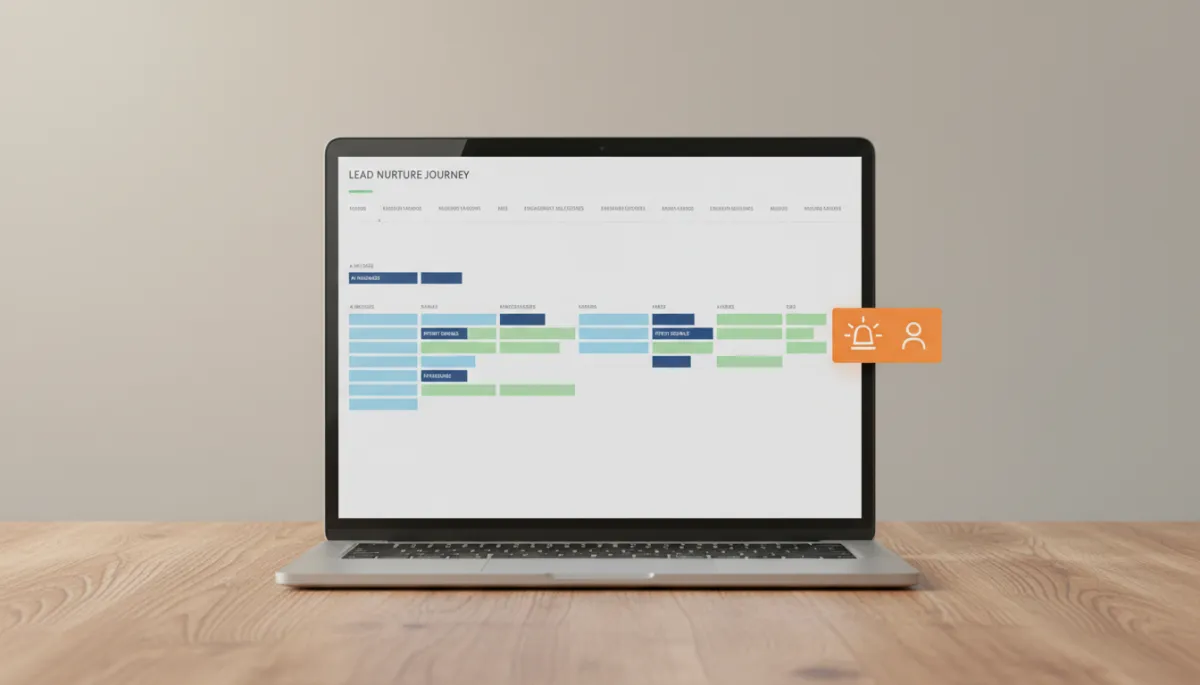
Governed AI nurture keeps your brand present—and compliant—until the exact moment a lead is ready to act.
5. Lead Nurture, Recruitment, and Multi-Office Scale
Most brokerages lose more money in silent churn than they do in bad campaigns. Leads come in. Timing is off by six, twelve, or twenty-four months. Agents get busy. Markets shift. Follow-up becomes sporadic. By the time the consumer is ready, they work with whoever has been most present recently—not necessarily the agent or team that paid for the original lead.
Agentic AI excels at persistent, personalized, low-friction nurture. Within the Target Stream AI Hub, the workflow looks like this:
Lead → Captured from any source and immediately engaged by Lead Response and Qualification agents.
AI Nurture → If timing is not immediate, the Lead Nurture Agent continues the conversation with market updates, property suggestions, and educational content tailored to their goals.
Intent Signal → When behavior or responses signal readiness—requesting a showing, asking about pre-approval, revisiting a valuation—the Hub flags it as a high-intent moment.
Human Agent → The assigned agent receives a concise, AI-generated summary of the entire conversation history and recommended next steps, enabling warm, informed outreach.
Appointment → Transaction → The agent leads showings, consultations, and negotiations, while AI supports with scheduling, documentation reminders, and post-closing touchpoints.
The same architecture powers agent recruitment. In many markets, the battle for talent is as intense as the battle for listings. Yet recruiting follow-up often suffers from the same issues as consumer nurture—delays, inconsistent messaging, and missed opportunities when leaders are in back-to-back meetings.
Prospective agents inquire via your careers page, social campaigns, or referrals.
The Recruiting Agent responds immediately, shares your brokerage story, explains splits, support, and culture, and gathers structured information about production and goals.
Qualified candidates are routed to the right manager with a summarized profile and recommended talking points.
Longer-term prospects are nurtured with market insights, training invites, and success stories so your brokerage stays top of mind.
For multi-office and multi-region brokerages, the AI Hub supports a two-level model:
Corporate level: Controls brand standards, AI policies, lead-routing rules, knowledge bases, marketing templates, compliance guidelines, and centralized reporting.
Office level: Manages local market nuances, agent rosters, campaigns, and community partnerships—within governance boundaries that keep the whole organization protected.

Multi-office brokerages use a centralized AI Hub to balance corporate standards with local agility and insight.
Leadership can see, in real time, how Agentic AI is impacting response times, conversion rates, and agent productivity across offices. More importantly, they can prove that AI is being used securely, ethically, and in full alignment with brand and regulatory expectations.
Why Now: Defining the New Standard of Service in Realty
Across real estate, AI has moved from experimentation to embedded infrastructure. A majority of agents already use or plan to use AI—mostly for time savings—while insisting on human oversight for accuracy and nuance. At the same time, consumers are being shaped by AI-powered platforms and generative search, where instant, conversational experiences—not voicemails—are the norm.
The gap between what buyers and sellers expect and what many brokerages deliver is widening. It shows up most clearly in speed-to-lead, follow-up consistency, and the ability to prove compliant, governed use of AI. For agents, brokers, team leaders, and multi-office owners, Agentic AI is not about replacing the human side of real estate. It is about making sure your expertise is never undermined by slow response times, missed calls, or ungoverned tools.
With a coordinated AI workforce, a centralized Brokerage AI Business Hub, and a Zero Trust AI Governance framework, you can turn every inquiry—buyer, seller, investor, or recruit—into a structured, measurable path toward a real conversation. Compliance becomes a differentiator. Independent and multi-office brokerages can move at startup speed with enterprise-grade rigor.
What This Means for Your Brokerage
Speed-to-lead is now an economic wedge: answering in seconds protects the marketing dollars you already spend and converts curiosity into appointments.
A coordinated Brokerage AI Workforce and AI Business Hub standardize the first 5–10 minutes of every relationship while your agents focus on advising and closing.
Zero Trust AI governance turns compliance into a competitive advantage by proving that every interaction is monitored, controlled, and aligned with evolving regulations.
Deploying AI with full audit trails, documentation, and version-tracked workflows lets you move fast and defend every decision to consumers, regulators, and brand partners.
Brokerages that operationalize Agentic AI now will define the new standard of service—always-on, deeply informed, and unmistakably human at the moments that matter most.
📌 Next Step: If you want a practitioner’s view of where you stand, not a sales demo, book a 30-Minute Brokerage AI Readiness Snapshot at targetstream.net. We will map your current systems, identify the fastest speed-to-lead and AI Governance wins, and outline a pragmatic path forward.
The brokerages that act now will not just keep up with technology. They will define the new standard of service in Realty: always-on, deeply informed, and unmistakably human at the moments that matter most.
Your Next Step
Step 1: Book Your 30-Minute Brokerage AI Readiness Snapshot — Start with a focused assessment of your current lead flow, governance posture, and technology stack. Book your Readiness Snapshot at targetstream.net and get time on the calendar.
Step 2: Hear a Live Lead Response Demo Call — Experience what an AI-governed, sub-60-second response sounds like for your own brand, scripts, and lead sources.
Step 3: Get Your Phase 1 Plan and Pricing — Receive a clear, phased rollout plan with concrete use cases, governance guardrails, and investment options so you can move from idea to implementation with confidence. When you’re ready to move, reach out directly via the Target Stream contact page to finalize scope and timing.
